For years, Search Engine Optimization (SEO) has been the foundation of digital visibility. But the rise of Answer Engine Optimization (AEO) marks a seismic shift — where AI systems like ChatGPT, Gemini, and Perplexity no longer just rank pages but generate the answers users seek. Instead of scrolling through “10 blue links,” people now ask, receive, and move on — meaning your SEO traffic may quietly be shrinking, even if your rankings look stable.
In 2025, over 60% of Google searches end without a click. Why? Because Google’s Search Generative Experience (SGE) and AI Overviews now summarize the answer at the top. Users no longer need to visit your site unless your content feeds these AI summaries.
Search is no longer just indexing — it’s interpreting. Tools like Bing Copilot and Google SGE use Large Language Models (LLMs) to scan top-ranking pages and rewrite them into conversational, human-friendly answers.
Answer Engine Optimization (AEO) ensures your brand’s voice is the one these models select, cite, and amplify.
Answer Engine Optimization (AEO) is the process of optimizing your content so that AI-driven platforms (like Google SGE, ChatGPT, Bing Copilot, and Perplexity) can extract, understand, and quote your answers directly in their results. Instead of ranking for blue links, you’re optimizing to be the answer.
| Traditional SEO | Answer Engine Optimization (AEO) |
|---|---|
| Focused on keywords, backlinks, and metadata | Focused on clarity, structure, and intent |
| Competes for ranked positions | Competes for featured or generated responses |
| Measured by clicks | Measured by mentions, citations, and visibility in AI summaries |
Users now treat AI interfaces as conversation partners. When someone asks, “What is Answer Engine Optimization (AEO)?”, they expect an instant, summarized answer, not a list of sites. The engine chooses sources based on clarity, schema, and credibility — not just backlinks.

This shift doesn’t mean SEO is dead — it means you must reframe your SEO strategy through an AEO lens.
If your content isn’t structured for Answer Engine Optimization (AEO), AI engines will paraphrase you — or worse, quote your competitors instead.
Branded queries (like “HubSpot CRM pricing”) may hold steady, but non-branded discovery queries (“best CRM for startups”) are now often answered by AI summaries that cite 2–3 sources, not 10 websites.
B2B marketers feel it first — fewer top-of-funnel visits, but higher-quality traffic from users who’ve already consumed AI-curated summaries before clicking through.

Use schema types like FAQ, HowTo, Article, and Speakable so AI engines can parse your content.
Engines prioritize expert-driven, firsthand content. Include bylines, credentials, and transparent citations.
Each H2/H3 should mirror user intent — e.g., “How does AEO work?” instead of generic “AEO process.”
AEO and voice SEO overlap: keep answers under 75 words, conversational, and context-rich.
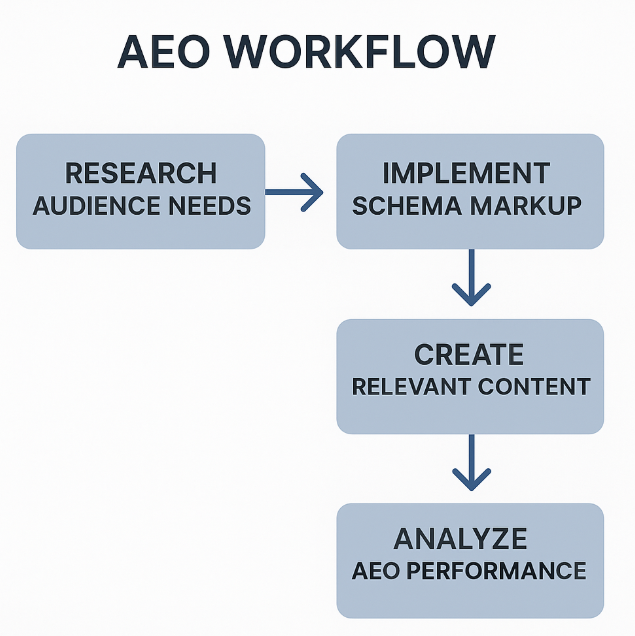
1️⃣ Map every page to a real question your user asks.
2️⃣ Add FAQ schema and Speakable markup.
3️⃣ Write 50–75-word summaries at the top.
4️⃣ Provide deep, structured insights below.
5️⃣ Use subheadings that match search phrasing (“How,” “Why,” “What is”).
AI summarizers pick sources that show clear structure, factual credibility, and consistent tone.
Transparent author bios, structured citations, and up-to-date stats increase your AEO inclusion rate.
Use platforms like AlsoAsked, AnswerThePublic, or Ahrefs to identify top question keywords and track snippet placements.
Track queries where impressions remain high but clicks drop — a key indicator of AEO-related zero-click shifts.
Q1: Is AEO replacing SEO?
A: No. It’s the evolution of SEO. AEO builds upon SEO by making your content machine-readable and contextually answer-ready.
Q2: How long does AEO optimization take?
A: Expect 30–60 days to see improved visibility in AI snapshots and featured results.
Q3: Do backlinks still matter?
A: Yes, but context matters more. AI engines favor authority and clarity over raw link volume.
Q4: Can I measure AEO performance in Rank Math?
A: Yes, by tracking FAQ schema, featured snippets, and voice-ready content performance.

Search has changed. Users don’t want ten links; they want a clear answer they can trust. Answer Engine Optimization (AEO) is how you meet that moment. It doesn’t replace SEO—it completes it. SEO makes you discoverable. AEO makes you quotable by AI systems like Google SGE, Bing Copilot, ChatGPT, and Perplexity.
If your traffic is slipping while rankings look “fine,” it’s likely zero-click behavior. Engines are summarizing more and sending fewer visitors to sites. The fix is to design content that can be lifted, cited, and credited. That means short, direct answers first, and deep, structured guidance right after. It also means schema, clear authorship, dates, sources, and a calm, conversational tone.
Think of Answer Engine Optimization (AEO) as three layers working together:
Days 1–30 — Foundation
Days 31–60 — Expansion
Days 61–90 — Optimization
Bottom line: In 2025 and beyond, brands that win will still play the SEO game—but they’ll win the AEO game first. Make your pages the easiest to quote, the safest to trust, and the fastest to understand. Do that, and Answer Engine Optimization (AEO) won’t just stop the quiet traffic leak—it’ll turn answer boxes and AI snapshots into a steady stream of qualified, ready-to-convert visitors.
Want help turning your top pages into AEO-ready answer hubs? Start with a 20-minute audit: we’ll map your quick-answer gaps, add the right schema, and give you a 30–60–90 plan you can execute this week.
